
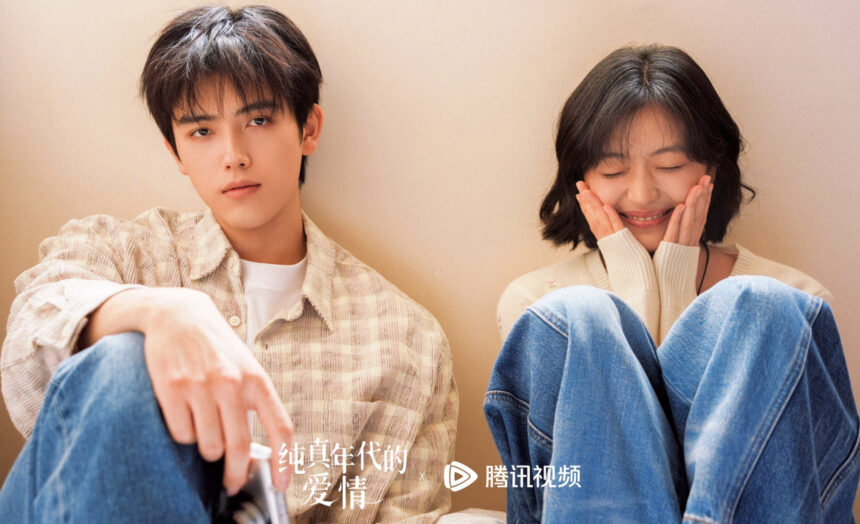
The 1970s-set period series Love Story in the 1970s has unexpectedly become a trending digital pick among young viewers in 2026. Industry observers say its popularity isn’t accidental. The show delivers what many call a reconstruction of “pure relationships”, offering light emotional relief at a time when Gen Z audiences often speak about modern relationship fatigue.
Notably, its Spring Festival broadcast window on CCTV expanded its social footprint. With plotlines referencing the resumption of the Gaokao and the return of Sent-down Youth, the production created a cross-generational dialogue. Parents saw echoes of their youth; younger viewers said they finally “got” that era after watching alongside family members.
Light Comedy Reframes a Heavy Era
Unlike traditional historical dramas centered on sacrifice and hardship, this production leans into a grounded, comedic tone. It’s been described as a “down-to-earth light comedy” model — and that shift seems deliberate.
Storylines such as “fake marriage for housing” and “bunk-bed split-expense (AA) marriage” are presented not as tragic compromises but as practical solutions. In one key arc, the heroine cares for an “amnesiac hero” to secure a university slot. Even a divorce agreement becomes lighter when a “little sun” is drawn on the back of it. It sounds odd, maybe even exaggerated, yet viewers say it works.
The male lead, played by Arthur Chen, also reshapes expectations. His character Fang Muyang doesn’t follow the stoic archetype typical of period dramas. Instead, he’s written with a softer temperament — almost “rabbit-coded,” as fans describe — while still maintaining a heroic presence. Scenes of him being fed carrots to recover his memory have circulated widely on short-video platforms. It’s serious but not heavy, emotional but not exhausting.
The pacing matters too. The emotional shift from contract marriage to genuine affection unfolds within ten episodes. There’s no extended melodrama. This “effortless immersion” has been cited in multiple online reviews as a factor behind its strong retention rate.

“Pragmatic Romance” and Gen Z Alignment
At its core, the show addresses emotional realities familiar to today’s audience. The heroine Fei Ni prioritizes career advancement, specifically securing a university placement. Fang Muyang quietly supports her ambitions. Their exchanges — including trading meat coupons for study materials — reflect what critics call a new paradigm of “Pragmatic Romance.”
This framing aligns with the widely shared sentiment among young people: “securing a livelihood before pursuing love.” It’s practical. Maybe even calculated. But viewers say it feels honest.
The relationship structure itself is restrained. Lingering glances, handwritten letters, and silent companionship shape the romantic arc. Beginning with a “respect agreement,” the couple builds intimacy through boundaries rather than spectacle. In an era of publicized relationships and oversharing, that discipline resonates.
There’s also a strong idealist layer. A staged marriage to facilitate reunion. Late-night studying inside a cramped tenement building. These plot devices underline a consistent message — protection of one’s original values despite material constraints. As one viewer summarized: “It uses the purity of the past to heal the impetuosity of the present.”
Retro Aesthetic Meets Idol-Drama Grammar
Production strategy has been widely discussed in entertainment media analysis. The show blends retro realism with contemporary idol-drama language. Soft-focus cinematography and close-up shots amplify couple chemistry — from height differences by a fireplace to prolonged eye contact. Some analysts have labeled it a “Socialist Idol Drama” hybrid, and the phrase has trended.
Costume styling also avoids a dated impression. While braided hairstyles and work-unit uniforms preserve 1970s authenticity, floral shirts worn by Sun Qian’s character and color-block sweaters styled on the male lead introduce subtle modern aesthetics. It’s period-accurate, but it doesn’t feel museum-like.
A secondary storyline — involving a high-society youth and a math teacher — incorporates the “substitute trope” with intellectual tension. The push-and-pull dynamic appeals to audiences interested in “sapiosexuality,” broadening demographic reach.
Post-Pandemic Context & Emotional Security
Media commentators link the series’ success to the broader post-pandemic environment. In uncertain social conditions, depictions of warmth in scarcity — even within an eight-square-meter room — provide reassurance. Optimism under constraint becomes a central theme.
The conclusion circulating among analysts is straightforward: period dramas don’t need to replicate misery to connect with younger viewers. A lighter tone, steady pacing, and grounded emotional logic may be more effective.
When Fei Ni sketches that small sun onto official paperwork, it’s not framed as symbolic exaggeration. It’s presented as ordinary resilience. And maybe that’s the point. In 2026, audiences aren’t necessarily looking for spectacle. They’re looking for sincerity — and apparently, they’re finding it in a story set in 1975.